









| Name | Helena Marino |
|---|---|
| Age | 23 |
| Status | Alive |
| Fraction | Order of the Eternal Flame |
| Repertoire | Vivimancy; Animancy |
| Eye Color | Dark brown |
| Hair Color | Curly dark brown hair |
| Family | Unnamed Father †, Unnamed Mother †, Enid (daugther) |
| Love Interests | Kaine Ferron (Husband) |
Contents






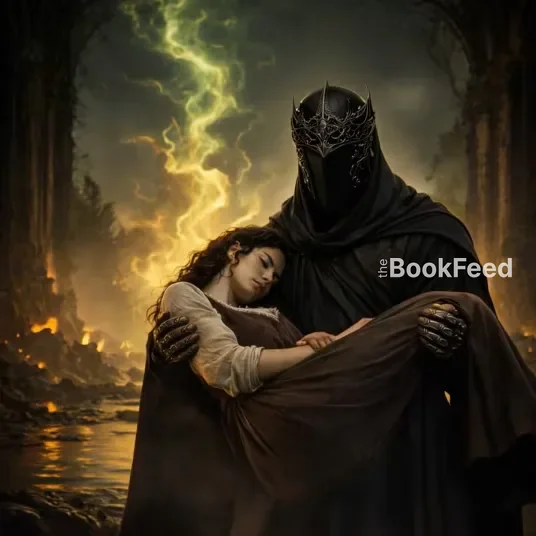





Biography / History
Helena Marino was born in Etras, an island culture where metal is scarce, and resonance is rare. She did not come from a guild family, nor was she raised within Paladia’s religious or political systems. Her parents possessed little to no usable resonance, making Helena’s emergence as a vivimancer unusual even by Paladian standards.
Recognized for her aptitude, Helena was brought to Paladia to study at the Alchemy Institute, where she received formal training in vivimancy and medicine. As a foreigner and non-guild alchemist, she occupied a precarious social position—valued for her ability, but excluded from the protections afforded to Paladian guild heirs.
Following her studies, Helena took vows as a healer under the Order of the Eternal Flame, serving in both civilian hospitals and on the front lines during the war. Her work placed her in constant proximity to death, and her increasing reliance on high-cost healing blurred the line between sanctioned vivimancy and forbidden practice.
As a condition of being permitted to practice vivimancy within Paladia, Helena was required to take permanent vows of celibacy. The Order of the Eternal Flame regarded vivimancy as a corruption that could be inherited, and feared the transmission of resonance through childbirth. Helena agreed to the condition in order to remain in the city and continue healing, believing that compliance would secure institutional acceptance and protection. The decision reflects the extent to which she was expected to limit her own life in exchange for being allowed to exist within Paladian society.
In the final year of the war, Helena became involved in events that were later deliberately erased from her memory. After Paladia’s fall, she was captured by the Undying and imprisoned as a war criminal, her past and identity subjected to scrutiny as both threat and resource.
Alchemised — Timeline Events
Part I: After the War (The Present)
Awakening in Captivity
After the war, Helena Marino awakens in captivity with no memory of the final year of the conflict. Labeled a war criminal, her resonance is suppressed and her existence partially erased from official records.
Transfer to the High Reeve
Helena is removed from stasis and transferred to the household of the Undying’s High Reeve, where she discovers that the position is held by Kaine Ferron, someone she knew before and during the war.
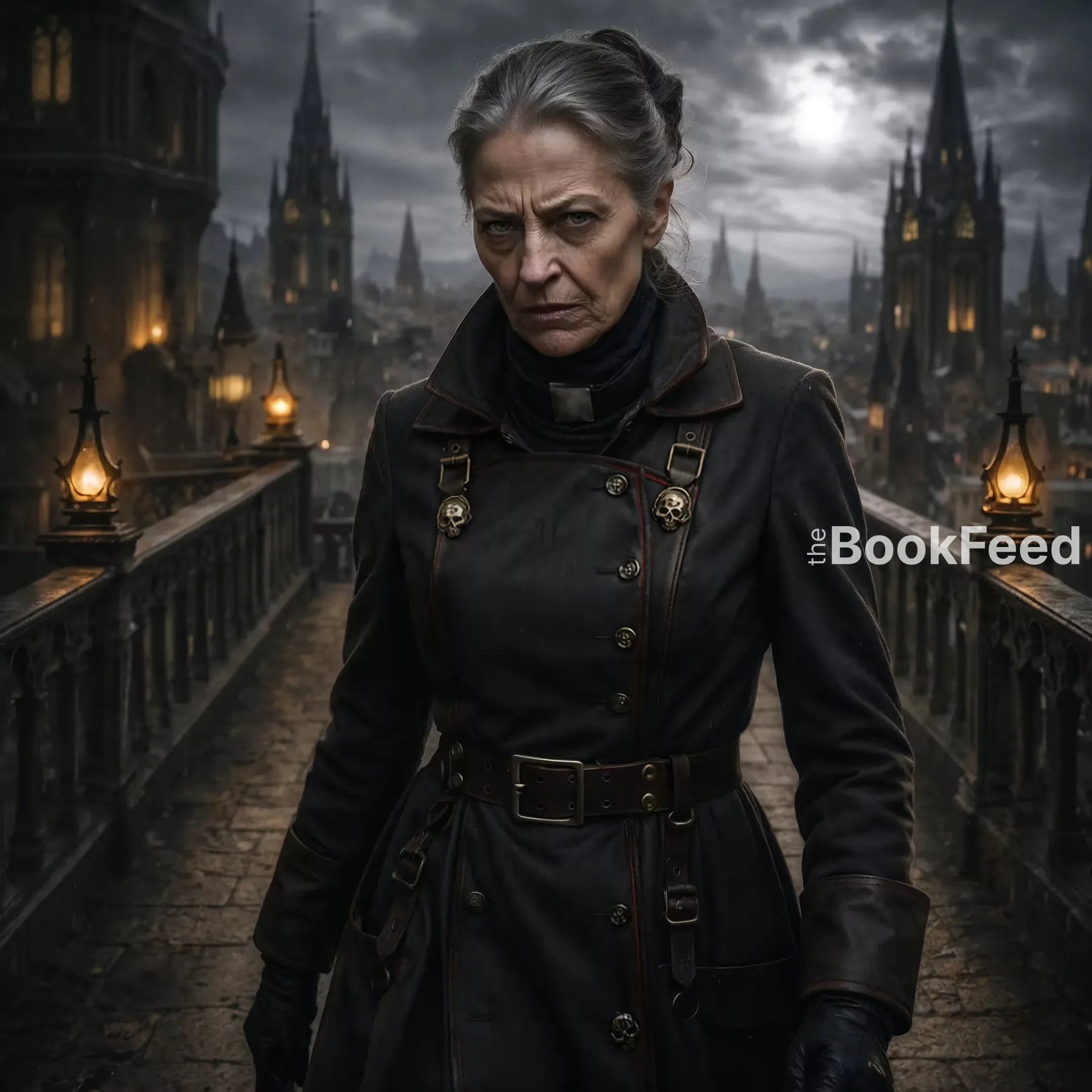
The Breeding Program
Helena is designated for Morrough’s post-war breeding program, which targets surviving female captives with resonance in an effort to produce a new generation of alchemists for the Undying.
Pregnancy
As a result of the program, Helena becomes pregnant. The strain places her life at risk and interferes with the memory suppression imposed on her, accelerating the return of erased memories.
Part II: The War (Recovered Memories)

Principate Rule and the Rise of the Undying
Prior to the war’s end, Paladia is ruled by the Holdfast Principate and the Order of the Eternal Flame, while the Undying rise under the High Necromancer through necromantic science and promises of immortality.
Helena’s Role in the War
Helena serves as a vivimancer assigned to protect Luc Holdfast, whose survival is considered essential to the war effort.

Kaine Ferron’s Defection
Kaine Ferron, heir to the Ferron iron guild, secretly defects from the Undying and becomes a spy for the Eternal Flame, using Helena as his assigned liaison.
Intelligence, Missions, and Alliance
Over the course of the war, Helena and Kaine exchange intelligence, survive repeated missions, and develop a personal relationship while navigating suspicion from both sides.
Exposure and Capture
As the war nears its conclusion, Kaine’s cover is exposed during a rescue operation, and Helena is captured while attempting to protect him and conceal his betrayal.
Memory Erasure
Helena deliberately alters her own memories to erase Kaine’s identity, ensuring he cannot be discovered under interrogation.
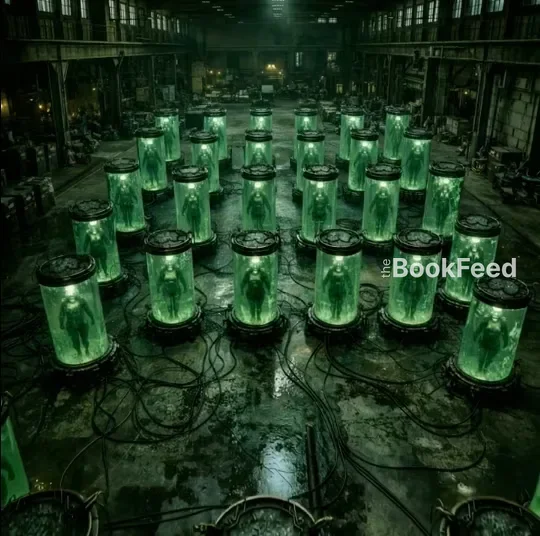
Stasis and Disappearance
She is placed in stasis, unrecorded, and effectively lost after the war’s end.
Part III: Return to the Present

Memory Restoration
Helena’s pregnancy disrupts the memory suppression placed on her, accelerating the return of her erased memories. As her awareness sharpens, it becomes clear that Morrough’s control over her—and over the situation—cannot be maintained.

Breaking the Necromantic Bond
Knowing she cannot remain hidden, Helena works to separate Kaine from Morrough’s control. The process requires the sacrifice of a willing soul. Through Helena’s intervention, Atreus Ferron agrees to give his life for his son.


Life in Hiding
With the truth of their actions and identities posing a permanent threat, Helena withdraws from public life. She raises her daughter, Enid, in isolation, knowing that discovery would mean execution.

Legacy
When Enid is grown, she is accepted into the Institute. For Helena, this represents both vindication and grief: proof that the sacrifices made during the war achieved something lasting, even as the cost remains largely unacknowledged.
Physical Description
Helena has very curly dark brown hair, which she traditionally wore in tight braids while practicing as a healer. She has large, dark eyes and a slight build, marked by the physical toll of prolonged healing and imprisonment.
Personality
Helena Marino is quiet, restrained, and deeply observant. She speaks sparingly and acts with care, shaped by years spent working at the edge of death as a healer.
She defines her worth through usefulness, particularly her ability to keep others alive. This makes her compassionate and reliable, but also willing to endure pain, loss, and moral compromise without complaint.
Helena is pragmatic rather than idealistic. She understands power and hierarchy and will cross lines she personally dislikes if it prevents greater harm. Guilt does not stop her—it follows her.
Her abilities leave her isolated: relied upon, yet distrusted. As a result, she forms few attachments, but her loyalty, once given, is unwavering.
At her core, Helena is resilient. She does not seek recognition or absolution—only to ensure that the cost of survival is paid by her, not by others.
Alchemical Abilities
Vivimancy: Healing Through Vitality
Helena Marino is a vivimancer, a practitioner of life-based alchemy focused on healing and the manipulation of vitality. Her resonance allows her to restore damaged tissue, stabilize failing bodies, and prevent death when intervention is still possible. Most routine healing can be performed repeatedly over time, but the cost increases sharply as injuries approach the threshold of death.
Healing that cheats death carries a specific consequence known as the Toll. To heal a mortal wound or sustain a body that should not survive requires the expenditure of vitality, life itself, drawn directly from the vivimancer. The greater the injury or the scale of the work, the greater the cost. Over time, repeated high-cost healing shortens a healer’s lifespan, gradually eroding both body and resonance. Helena experiences this loss as a physical sensation, likened to life being diverted away from her own body and into another.
Helena’s Alchemical Limits
| Aspect | Description |
|---|---|
| Primary Discipline | Vivimancy (healing, vitality transfer) |
| Secondary Training | Limited animancy (medical use only) |
| Forbidden Practice | Necromancy (does not practice) |
| Major Cost | Vitality loss / shortened lifespan |
| Institutional View | Necessary but distrusted |
Religious and Institutional Tension
The Sacred Faith permits healing as a purifying act, but strictly forbids applications that linger too close to death. Helena’s abilities exist at this boundary. While she does not practice necromancy, her capacity to sustain the dying places her under constant suspicion, viewed as a necessary risk rather than a holy ideal.
Animancy: Medical Application Only
Helena Marino possesses limited animantic ability in addition to her primary vivimantic repertoire. Her animancy does not grant broad authority over the mind. Instead, it manifests as a narrow, self-directed application used to regulate cognition under extreme stress.
Helena can use resonance to suppress intrusive thoughts, redirect mental focus, and distance herself from overwhelming emotional responses. She initially develops this technique for controlled situations, but later relies on it more frequently while stationed at Headquarters.
Her animantic control remains unstable. Attempts to suppress deep emotional states, such as dread, often fail and may intensify the underlying distress rather than resolve it. Animancy does not provide her reliable emotional relief.
Helena refuses to employ vivimancy for torture or coercion. Instead, she experiments with animantic techniques for information extraction, treating them as an extension of medical practice rather than interrogation. These efforts remain imprecise and dangerous, and failure carries significant psychological risk.
Repertoire Limitations
Helena’s resonance is overwhelmingly aligned with organic systems. She does not possess a broad alchemical repertoire, nor does she demonstrate aptitude for metallurgy or large-scale transmutation.
Relationships
| Kaine Ferron | Helena Marino and Kaine Ferron fall in love during the war, before the collapse of Paladia. At that time, Helena serves as a healer aligned with the Order of the Eternal Flame while also acting as a liaison with the Resistance, a role that brings her into sustained contact with Kaine. Their relationship develops gradually under conditions of secrecy, political tension, and shared risk. During the war, Kaine has not yet fully assumed his role within the Undying, and Helena does not yet know the extent of his future allegiance. What forms between them is rooted in mutual recognition, intellectual parity, and a shared understanding of the moral compromises demanded by survival. Their bond deepens into love even as the world around them fractures. After Paladia’s fall, their relationship is irrevocably altered. Helena is imprisoned by the Undying, and Kaine—now High Reeve—becomes one of the figures responsible for her captivity. Their shared history and love persist, but are reshaped by guilt, power imbalance, and the knowledge of what each has become. The tension between their past intimacy and present reality defines the tragedy at the center of their story. |
|---|---|
| Luc Holdfast | Helena Marino and Luc Holdfast share a relationship rooted in friendship, loyalty, and mutual isolation. When Helena first comes to Paladia as a foreign student from Etras, she is socially marginalized—an outsider without guild backing, noble lineage, or religious pedigree. While others keep their distance, Luc befriends her openly. Their bond forms early and deepens over time, long before Luc assumes the full weight of the Principate. Luc becomes Helena’s closest companion during her years of study and service. He treats her as an equal, valuing her intelligence, moral clarity, and compassion rather than her usefulness as a healer. For Helena, who is frequently isolated by suspicion and institutional control, Luc’s friendship offers stability and trust in a city that otherwise withholds both. As the war escalates and Luc is forced prematurely into leadership, their friendship shifts but does not diminish. Helena remains one of the few people Luc trusts implicitly, and she acts not only as his healer but as a confidante and protector. Her decisions during the war are shaped by a fierce determination to keep Luc alive—not because of his title, but because he is her best friend and one of the last people she believes in. |
| Lila Bayard | Helena Marino’s relationship with Lila Bayard is shaped by professional respect, guarded trust, and shared endurance during the war. As a paladin sworn to protect Luc Holdfast, Lila initially views Helena through the lens of duty and caution—particularly given Helena’s foreign origins, vivimancy, and proximity to political power. Over time, that wariness gives way to mutual recognition. Lila witnesses Helena’s commitment to preserving life under impossible conditions and comes to respect her resolve and competence as a healer. Helena, in turn, recognizes Lila’s discipline, loyalty, and willingness to shoulder responsibility without illusion. Their bond is not intimate in the way Helena’s relationships with Luc or Kaine are, but it is built on reliability and earned trust. |
