














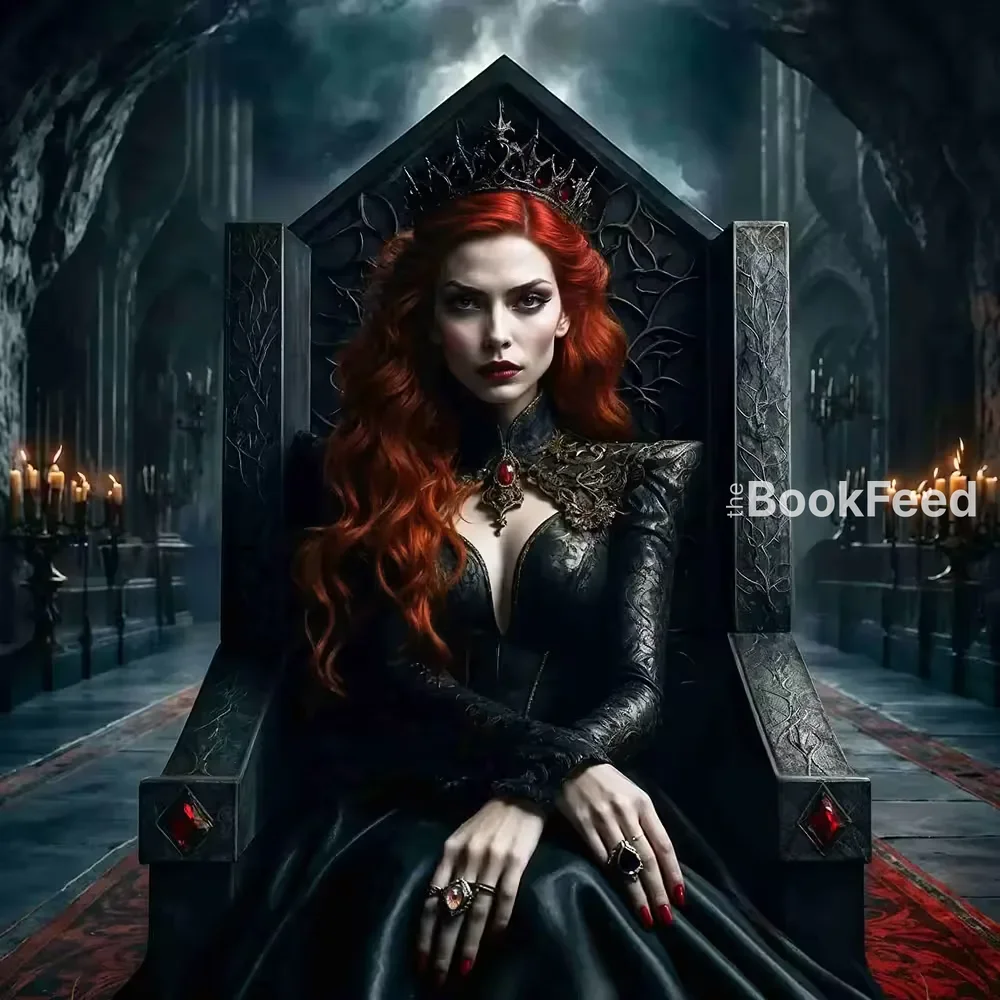
| Name | Amarantha |
|---|---|
| Age | 500+ |
| Species | High Fae |
| Status | Deceased |
| Court | Hybern |
| Rank/Title | General (formerly), High Queen of Prythian (formerly) |
| Eye Color | Black |
| Hair Color | Red-gold |
| Family | Clythia † (sister) |
| Love Interests | Tamlin (unrequited love interest) |
| Appears in | A Court of Thorns and Roses |
Contents
Amarantha – Important Questions (Quick Answers)
Who is Amarantha?
Amarantha is the primary antagonist of A Court of Thorns and Roses. A powerful and sadistic High Fae, she conquers Prythian and enslaves its High Lords, ruling from Under the Mountain through cruelty, manipulation, and fear.
What did Amarantha do to Prythian?
Amarantha curses the High Lords of Prythian, strips them of most of their power, and forces them into submission for fifty years. She establishes herself as absolute ruler, using public executions, torture, and twisted games to maintain control over both fae and humans.
What powers does Amarantha have?
Amarantha wields immense and brutal magic, including mind control, curse-casting, and lethal spellwork. Her power allows her to dominate other High Fae, bind High Lords, and inflict physical and psychological punishment.
What is Amarantha’s connection to Feyre?
Amarantha captures Feyre and forces her into a series of deadly trials Under the Mountain. Through these trials, Amarantha seeks entertainment and control, ultimately killing Feyre before the High Lords resurrect her as High Fae.
How does Amarantha die?
Amarantha dies at the end of A Court of Thorns and Roses after Feyre breaks the curse. Once the High Lords’ powers are fully restored, Tamlin kills Amarantha, ending her reign Under the Mountain and freeing Prythian from her control.
Was Amarantha in love with Tamlin?
Amarantha believed she was in love with Tamlin, but canon portrays her feelings as obsession rather than genuine love. She desired Tamlin’s power, beauty, and defiance, and when he rejected her, that fixation turned into cruelty and vengeance. Her fixation on Tamlin ultimately drives the curse on the Spring Court and her reign Under the Mountain.


Biography / History
Origins & Rise to Power
Amarantha was born in Hybern, a kingdom ruled by a king who despised mortals and opposed any treaty with them. She rose to become the king’s most feared general during the War between humans and faeries. During this time, she formed a strong alliance with the High Lord of the Spring Court—Tamlin’s father—who shared her belief that mortal slaves should not be freed. Because of this alliance, Tamlin visited Hybern often, and Amarantha attempted repeatedly to seduce him, though he rejected her every time.
Jurian’s Manipulation and Clythia’s Death
Amarantha had a sister, Clythia, who fell in love with Jurian, one of the leading commanders of the mortal armies. Jurian used Clythia to gain intelligence on the fae, while pretending to love her. Amarantha saw through him but could neither convince her sister nor bring herself to kill Jurian.
Jurian eventually brutally murdered Clythia, crucifying her with ash wood and carving her into pieces for Amarantha to find. This trauma ignited Amarantha’s lifelong hatred of mortals.
Amarantha tracked down Jurian, fought him in a final battle, and tortured him for weeks before killing him. She disobeyed Hybern’s orders to return to battle until she had finished her revenge—an act that helped cost Hybern the War. She kept Jurian’s eye and finger bone, binding his consciousness inside them, leaving him trapped in a half-life for centuries.
After the Treaty, Amarantha chose to slaughter her mortal slaves rather than free them.
Return to Prythian as an Emissary
One hundred years before A Court of Thorns and Roses, Amarantha returned to Prythian as a Hybern emissary. She charmed the High Lords with promises of improved trade, communication, and peace, claiming to regret her actions during the War. Courts began calling her the “Never-Fading Flower.”
Unbeknownst to everyone, including Hybern’s king, the ships delivering Hybern goods also carried Amarantha’s private army. She intended to conquer Prythian and later destroy the mortal lands.
Fifty years later, Amarantha tricked the seven High Lords into drinking drugged wine. Using a spell stolen from the King of Hybern, she siphoned away their power and declared herself High Queen of Prythian. She then made her court Under the Mountain, a site sacred to Prythian’s history.
Reign Under the Mountain
To punish the Night Court for past grievances, she enslaved Rhysand, forcing him into the role of her consort. When Lucien, Tamlin’s emissary, insulted her during peace talks, she gouged out his eye with her fingernail and scarred his face.
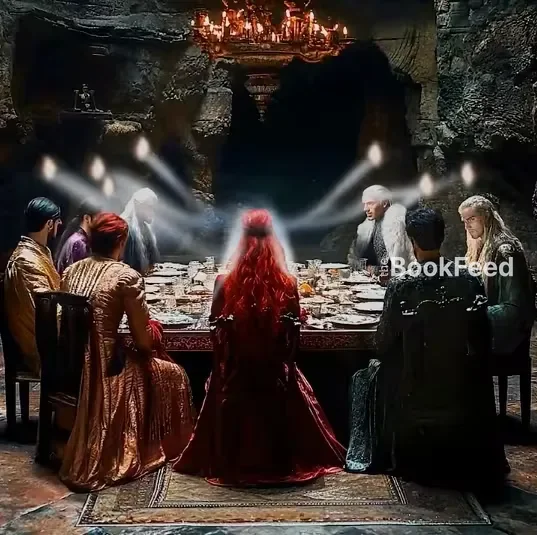
Amarantha hosted a masquerade Under the Mountain to “apologize,” requiring the entire Spring Court to attend masked. She demanded that Tamlin become her consort; he refused and insulted her. Humiliated, Amarantha:
- Cursed Tamlin and the Spring Court
- Bound their masks to their faces
- Turned Tamlin’s heart to stone
- Gave him 49 years to break the curse
- Required him to make a mortal girl who hated fae fall in love with him
- Forbade the fae from explaining the curse
- Forced Tamlin to send masked fae across the Wall to be killed
Amarantha believed these conditions impossible—her goal was to force Tamlin into submission.
Forty years before the events of ACOTAR, the High Lords of the Day, Summer, and Winter Courts attempted a rebellion. Amarantha discovered the plot early and killed them and most of their families. Using their stolen magic, she bound each court to Under the Mountain, preventing them from traveling or organizing a revolt. Only the Spring Court was allowed to remain on its territory until Tamlin’s deadline expired.
Rhysand was granted limited freedom due to his role as her coerced consort, which he used to gather intelligence.
The Trials and Fall of Amarantha
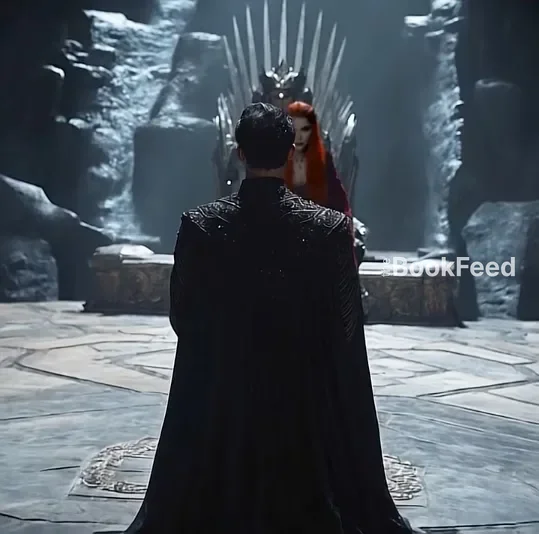
When Tamlin failed to break the curse by the allotted deadline, Amarantha dragged the entire Spring Court Under the Mountain. Feyre arrived soon after, demanding Tamlin’s freedom. Amarantha gave her a choice: solve a riddle or complete three deadly tasks to win the Spring Court’s release. Feyre survived the trials with covert help from Lucien and Rhysand, but Amarantha twisted her words to deny Feyre victory, publicly torturing and killing her.
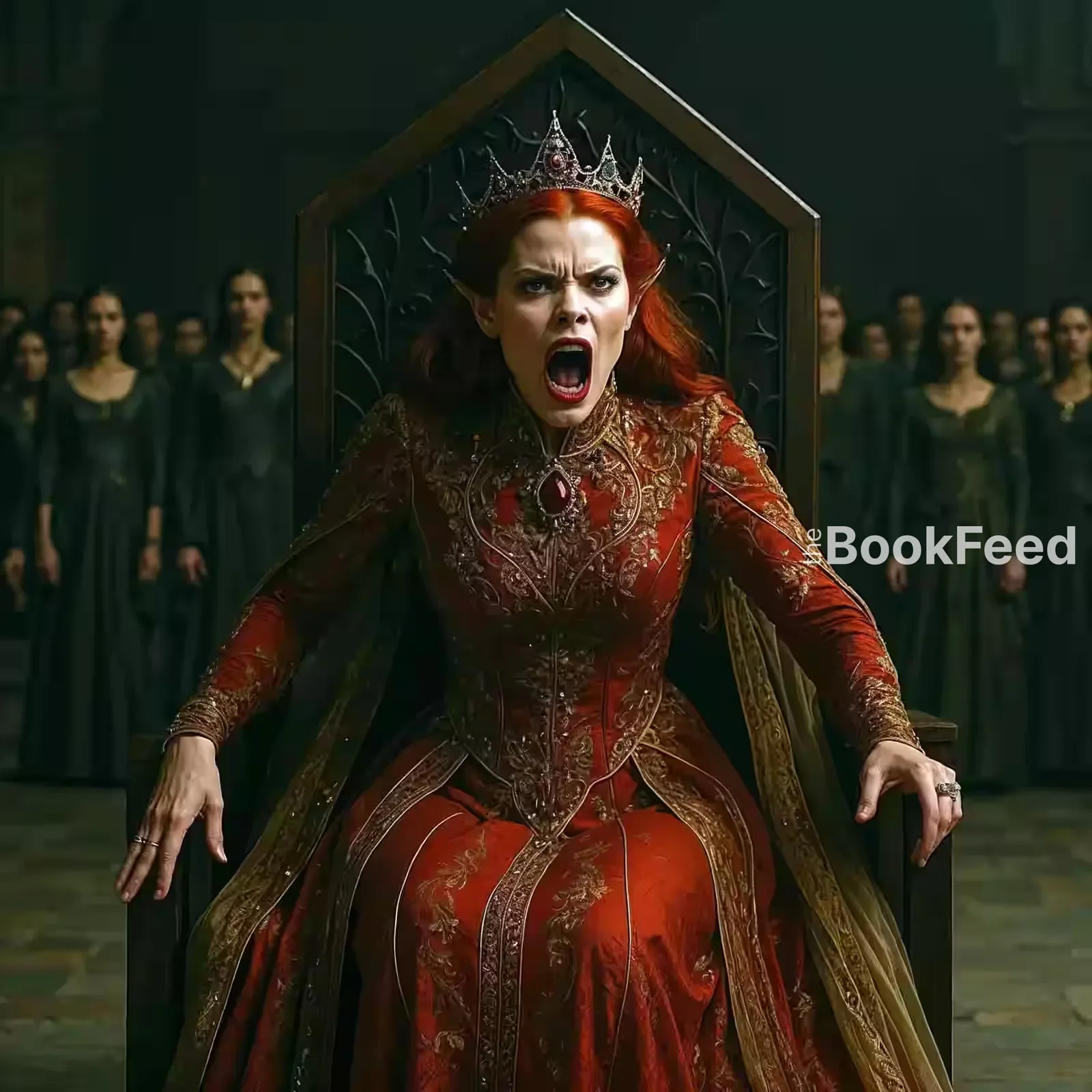
In death, Feyre finally solved the riddle, shattering the curse. Freed and restored to full power, Tamlin killed Amarantha in a frenzy of rage, ending her reign and releasing all of Prythian from her control.
Appearance
Amarantha has a striking, carefully controlled appearance, with:
- Neatly braided red-gold hair woven through a golden crown
- Pale, white skin that contrasts with her ruby-colored lips
- Slightly pointed High Fae ears
- A charming allure that conceals her brutality
Feyre notes that although Amarantha is lovely, she is not devastatingly beautiful, and her elegance carries a cold, contrived quality that reflects her nature. She is also always seen wearing a ring and necklace made from Jurian’s eye and finger bone, trophies from her revenge.
Personality
Amarantha is defined by cruelty, vindictiveness, and an obsessive hunger for control. Shaped by wartime brutality and the murder of her sister, she channels her grief into sadism, domination, and a deep hatred of mortals.
Key traits
- Cruel and sadistic:
Amarantha delights in inflicting both physical and emotional pain. Her torture of fae and mortals alike—Under the Mountain and during the War—marks her as one of Prythian’s most vicious figures. - Vindictive and ruthless:
She retaliates without mercy, even defying orders from the King of Hybern to pursue personal revenge. Her slaughter of her own mortal slaves after the Treaty further demonstrates her brutality. - Obsessively vengeful:
Clythia’s death at Jurian’s hands fuels Amarantha’s deep hatred of mortals. She believes they are fickle, untrustworthy, and incapable of true love for faeries. - Capable of love, but twisted by grief:
Despite her nature, Amarantha genuinely loved and protected her younger sister. Unable to prevent Clythia’s death, she emerged from the War even more vicious than before. - Psychologically destructive:
Her reign Under the Mountain leaves lasting trauma on those she imprisons. Feyre experiences severe psychological damage after surviving her trials, even becoming unable to bear the color red because of Amarantha’s cruelty.
Powers & Abilities
High Fae
As a High Fae, Amarantha possessed the enhanced physical abilities typical of her kind.
She had:
- Immortality
- Enhanced strength, speed, and senses
- Advanced healing and durability
- Standard High Fae magic, including spellcasting and curse-weaving
Amarantha was exceptionally powerful even before gaining stolen magic. She was deeply knowledgeable in spells, curses, and binding enchantments, capable of crafting complex, long-lasting spells such as trapping Jurian’s consciousness inside his severed eye and finger bone.
Stolen High Lord Powers
Fifty years before the events of A Court of Thorns and Roses, Amarantha used a spell stolen from the King of Hybern to drug and trick all seven High Lords, siphoning away their magic.
After stealing their power, she gained:
- Amplified raw magical strength, surpassing most fae
- The ability to subdue and control faeries, and to a lesser extent, influence even the High Lords
- Access to a range of High Lord–level abilities, though never at their full strength
- Enhanced offensive and defensive power, allowing her to dominate Prythian
Her stolen magic made her effectively unstoppable for decades. Upon her death, all stolen power instantly returned to the High Lords.
Relationships
| Clythia | Amarantha shared a strong bond with her sister, Clythia, until Clythia fell in love with a human who manipulated her and ultimately killed her. Despite feeling betrayed, Amarantha avenged her sister’s death with brutal determination. Both sisters were known for their cruelty and vindictiveness, but Clythia’s murder pushed Amarantha into becoming even more ruthless than before. |
|---|---|
| Jurian | Jurian was the human who deceived Amarantha’s sister, Clythia—pretending to love her while using her for intelligence, before crucifying her with ash wood and cutting her into pieces. After learning of Clythia’s murder, Amarantha confronted Jurian on the battlefield during the War, even using Hybern and Prythian soldiers as shields to reach him. Despite magical protection meant to keep her from harming him, she captured Jurian and dragged him back to her war camp, where she tortured him for weeks. When she finally killed him, she kept two trophies: a finger bone, which she crafted into a necklace, and one of his eyes, into which she bound his soul and awareness, turning it into a living ring. Jurian’s actions cemented Amarantha’s enduring, violent hatred of humans. |
| Tamlin | Amarantha was fixated on Tamlin and repeatedly attempted to lure him into her bed, but he consistently rejected her advances. Her frustration and rage grew each time he refused her. When Lucien was sent as Tamlin’s emissary to negotiate peace, Amarantha retaliated by gouging out his eye and scarring his face. Later, at the masquerade Under the Mountain, she cursed Tamlin and his entire court. Her treatment of him was driven by obsession and cruelty rather than genuine affection; at most, Amarantha loved the idea of Tamlin, not the male himself. |
| Rhysand | As punishment for the former High Lord of the Night Court killing the High Lord of the Spring Court, Amarantha forced Rhysand into becoming her sex slave. The abuse left him with deep and lasting trauma. To survive, Rhysand maintained a façade of loyalty, carrying out her orders and behaving as though he supported her, all to stay in her favor and protect his court. Amarantha never saw through his act and continued to grant him limited freedoms, unaware of his true intentions. |
